




What Is Media Accessibility and How Can You Make Media Content Accessible?
What Does Media Accessibility Mean in Digital Content?
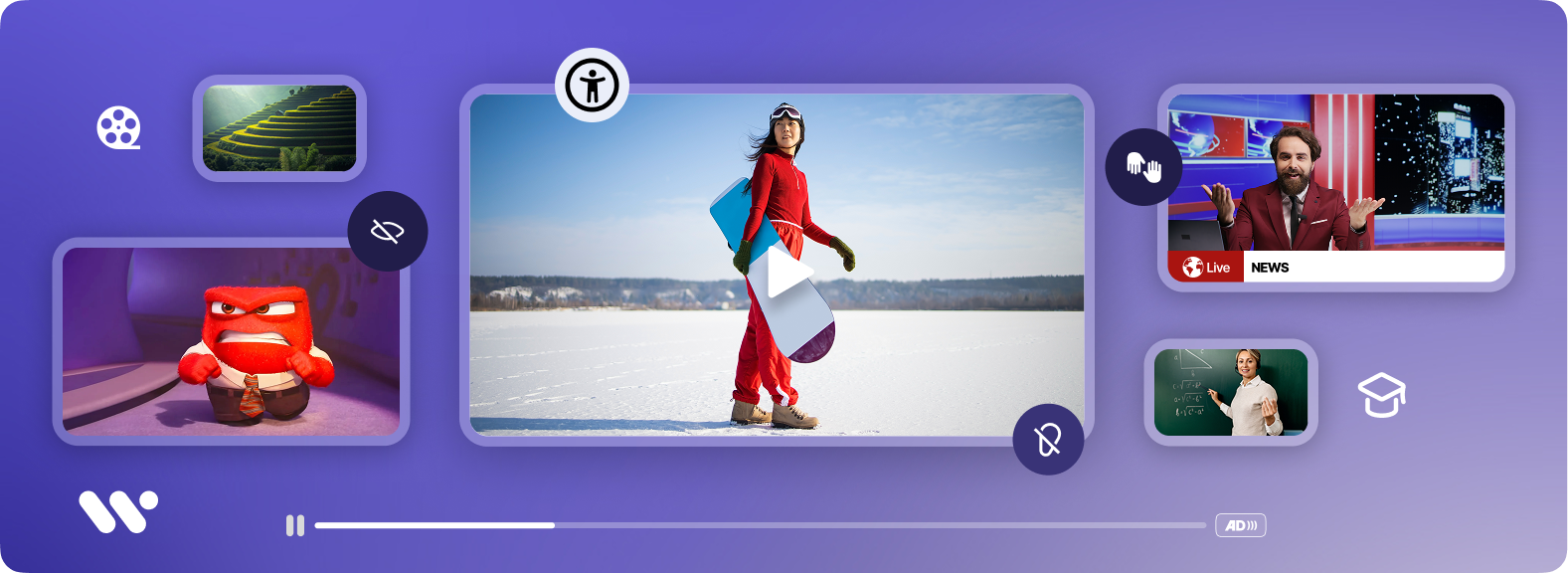
Media accessibility refers to the practice of designing digital media so that all users can perceive, understand, and interact with content without barriers, including people with visual, auditory, or cognitive disabilities.
It ensures that multimedia content such as videos, audio, images, and interactive elements is compatible with assistive technologies like screen readers, captions, and voice navigation tools. This includes essential accessibility components such as subtitles, transcripts, audio descriptions, and keyboard-friendly navigation.
Rather than being a technical add-on, media accessibility is now a core part of modern digital experience design and is closely aligned with established accessibility standards.
Why Is Media Accessibility Important for Businesses and Platforms?
Media accessibility improves usability by making digital content easier to consume for all users, including people with disabilities.
Accessible media environments support assistive technologies such as screen readers, voice control systems, and captioning tools, reducing friction in content consumption and improving overall engagement.
From a business perspective, accessibility also:
- improves compliance readiness with global standards
- increases audience reach
- enhances SEO performance
- strengthens brand trust and reputation
As a result, accessibility directly contributes to better user experience and higher content performance across digital platforms.
What Are the Key Standards and Laws for Media Accessibility?
Media accessibility is guided by global frameworks that define how digital content should be designed to ensure equal access.
The most widely recognized standard is WCAG 2.2 (Web Content Accessibility Guidelines) developed by the W3C (World Wide Web Consortium). These guidelines define principles such as perceivability, operability, understandability, and robustness.
In addition, legal frameworks enforce accessibility compliance across digital environments:
- Americans with Disabilities Act (ADA) – United States
- Accessibility for Ontarians with Disabilities Act (AODA) – Canada
- European Accessibility Act – European Union
These regulations increasingly apply to websites, applications, and digital media content, making accessibility a formal requirement rather than a best practice.
Which Assistive Technologies Are Used in Media Accessibility?
Media accessibility depends on assistive technologies that help users interact with digital content based on their needs.
Screen readers
Convert on-screen content into speech or Braille output for visually impaired users.
Text-to-Speech (TTS)
Reads written content aloud to support users with reading or visual difficulties.
Audio description tools
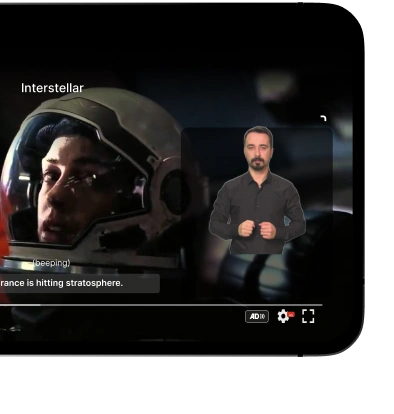
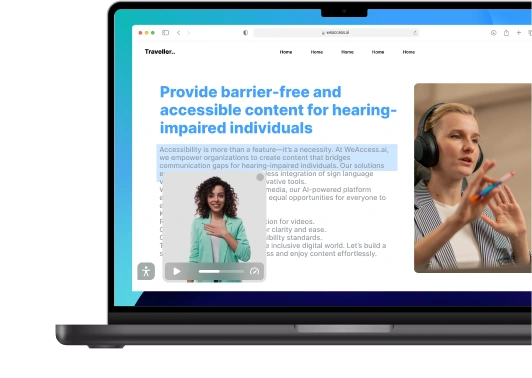
Provide spoken narration of visual elements in videos.
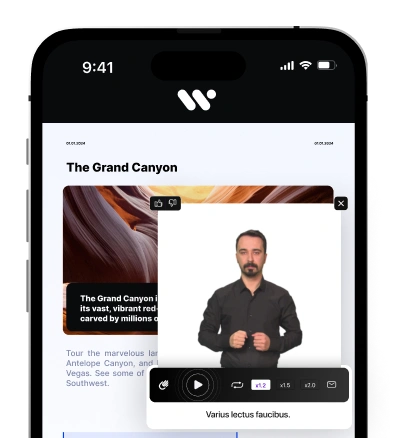
Sign language interpretation
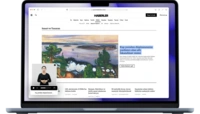
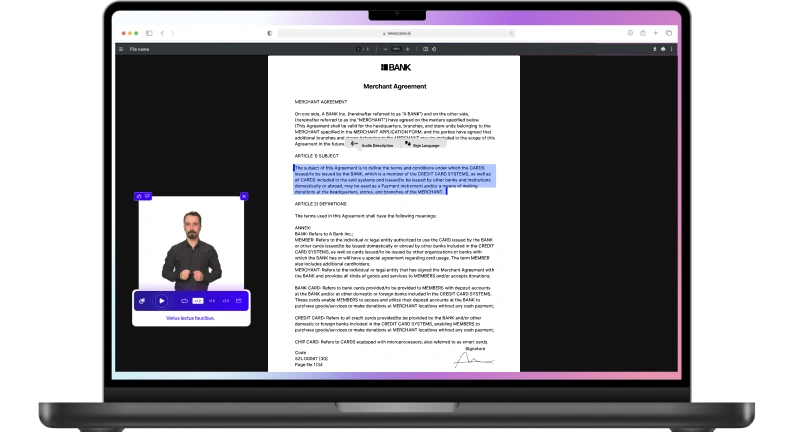
Delivers content in sign language for deaf and hard-of-hearing users.
Accessible video players
Support keyboard navigation, captions, and compatibility with assistive technologies.
These technologies ensure that digital media is usable across a wide range of accessibility needs.
How to Make Video Content Accessible?
Video accessibility requires structuring audiovisual content so it can be understood without relying solely on sound or visuals.
Video Accessibility Checklist
- Captions – Provide synchronized captions for spoken dialogue and key sounds
- Subtitles – Offer translated or same-language subtitles where needed
- Transcripts – Include full text versions of video content
- Audio descriptions – Describe visual elements for blind or low-vision users
- Accessible controls – Ensure full keyboard operability for video players
- Visual clarity – Use high contrast and avoid relying only on color
- Synchronization – Keep captions and audio aligned with video timing
How to Make Audio Content Accessible?
Audio accessibility focuses on ensuring that spoken content can be understood through alternative formats when needed.
Audio Accessibility Checklist
- Transcripts – Provide complete text versions of audio content
- Text-to-Speech support – Enable playback of written content
- Clear narration – Use structured and easy-to-follow speech
- Audio quality – Reduce background noise for better clarity
- Logical structure – Organize spoken content for easier understanding
- Standards compliance – Follow WCAG-aligned audio accessibility practices
How to Improve Website Accessibility for Media Content?
Improving accessibility for media-heavy websites requires optimizing both design and interaction structure.
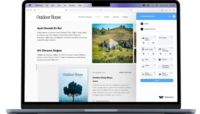
Key improvements include ensuring keyboard navigation support, proper image descriptions, readable typography, and sufficient color contrast for all interface elements.
Responsive design techniques such as media queries also ensure that content adapts across devices without losing readability or usability.
Website Media Accessibility Checklist
- Keyboard navigation for all interactive elements
- High color contrast for readability
- Scalable font sizes across devices
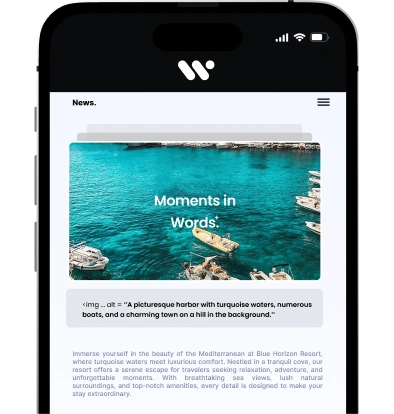
- Alternative text for all meaningful images
- Clear and descriptive link text
- Accessible on-screen text overlays
- Responsive layouts using media queries
These improvements enhance usability, engagement, and overall content performance.
How to Make Social Media Content Accessible?
Social media accessibility ensures that posts, videos, and images can be understood by all users regardless of ability or device limitations.
This includes adding captions, transcripts, and clear text structures, as well as ensuring that visual content remains readable and meaningful without sound.
Social Media Accessibility Checklist
- Captions for all video content
- Transcripts for audio and video posts
- Accessible hashtags using CamelCase
- Clear and concise content structure
- High-contrast text overlays
- Descriptive and meaningful captions
Accessible social media content improves engagement, especially in mobile and silent-scrolling environments.
What Are the Best Tools and Platforms for Media Accessibility?
Modern accessibility workflows rely on tools that help identify, monitor, and resolve accessibility issues across digital content.
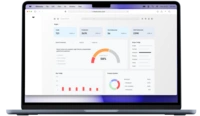
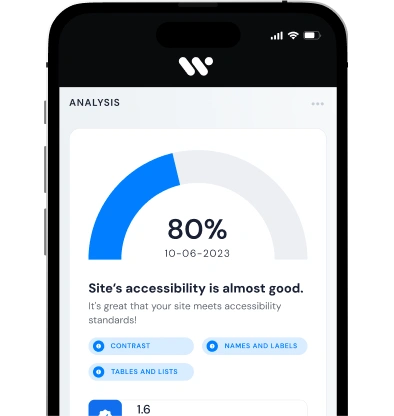
Platforms like Weaccess.ai support organizations by analyzing accessibility barriers, identifying WCAG-related issues, and enabling continuous monitoring across digital media assets.
These solutions help teams maintain consistent accessibility standards throughout the content lifecycle while improving efficiency in remediation workflows.
How Do You Test Media Accessibility Before Publishing?
Testing media accessibility ensures that digital content works correctly for all users before it goes live.
A strong testing process combines automated checks with real-user validation and structured accessibility review frameworks.
Media Accessibility Testing Checklist
- Real user testing with assistive technologies
- Automated WCAG compliance scanning
- Validation of accessibility best practices
- Review of video accessibility elements
- Content clarity and readability checks
Early testing reduces compliance risks and improves overall user experience.
What Are Common Accessibility Risks in Media Content?
Media accessibility is often broken when digital content is not designed with inclusive principles in mind.
Common risks include flashing content that may trigger photosensitive reactions, low color contrast that reduces readability, and missing captions that make video content inaccessible.
Additional issues such as missing alt text and broken keyboard navigation further reduce usability and create barriers for users relying on assistive technologies.
These failures significantly reduce overall user experience quality and limit access to digital content for a wide audience.
Final Takeaway
Media accessibility is not only about compliance but about creating inclusive digital experiences that allow all users to engage with content equally.
When implemented correctly, it improves usability, strengthens SEO performance, and enhances overall digital content quality.